 SeatecHIROSHIMA Ltd.
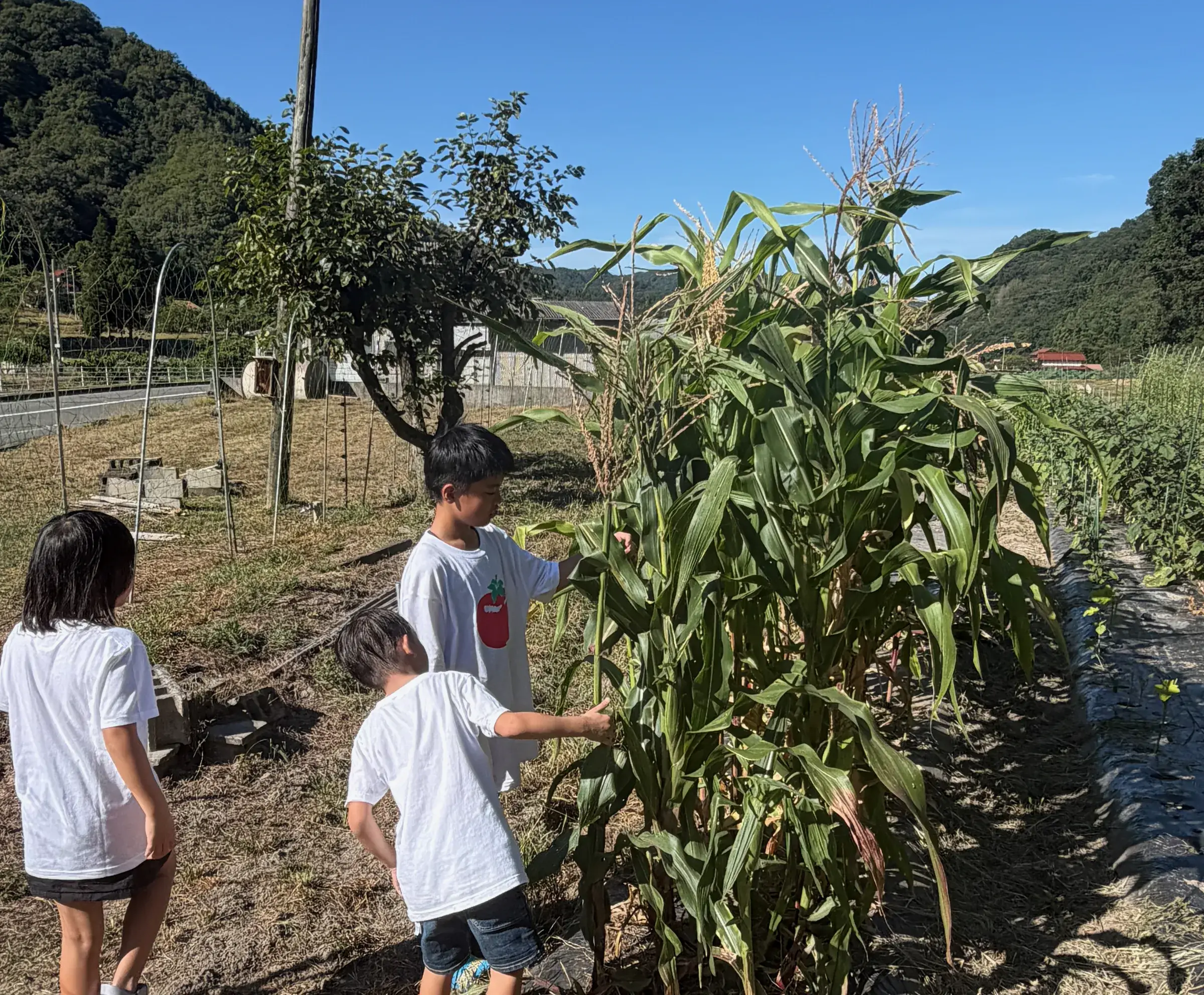
Rice husks for better soil
Rice husks for better soil: a treated surface turns them into a material that builds soil
We turn rice husks into a material that builds farm soil. With a soil improver made from treated rice husks, we confirmed faster germination and growth of radishes in Hiroshima Prefecture. It is also in use at a farm in Takehara, Hiroshima Prefecture.
For farmers, JA agricultural cooperatives and local governments
- Stage: Proven, Rice husks for better soil
- Stage: Concept, Bringing abandoned farmland back into use
- Stage: Concept, Restoring salt-damaged farmland (Noto and elsewhere)
The problem
Grow the same crop in the same field year after year, and it can start to do poorly, a problem known as continuous cropping injury. Meanwhile, rice growing leaves large amounts of husks every year, and left as they are, husks are slow to return to the soil.

What we do
We treat the surface of rice husks and settle three kinds of microbes on them, among them the bacterium used to make natto, a fermented soybean food. The soil improver that results is spread on fields.
How the treatment worksWhere things stand, and what to know
- Allow about six months from spreading it on a field to starting the first crop.
- Stage: Concept, We are also considering its use on abandoned farmland and salt-damaged fields.
Stage and evidence
Each claim carries its own stage, and who confirmed it where that is on record.
Rice husks for better soil
We treat the surface of rice husks and settle useful microbes on them, turning the husks into a soil improver for building up farm soil.
Stage: Proven, Our own work
With a soil improver made from treated rice husks, we confirmed faster germination and growth of radishes in Hiroshima Prefecture.
Stage: Proven, Our own work
The first crop can be started about six months after the soil improver is spread on a field. It takes a year for the husks to return to the soil and for the microbes to become fully established.
Stage: Proven, Our own work
A farm in Takehara, Hiroshima Prefecture, used it against the problems that come from growing maize in the same field year after year, and has gone on using it for other crops since.
Related uses
- Stage: Being tested, Restoring eelgrass beds
- Stage: Concept, Reusing untapped resources (biomass other than rice husks and more)

Bringing abandoned farmland back into use
An idea for using treated rice husks to bring fields that are no longer farmed back into cultivation.
Stage: Concept,
We are considering using treated rice husks to speed up soil building, so that abandoned farmland can be cultivated again and more people can take up farming.
Related uses
- Stage: Concept, Restoring salt-damaged farmland (Noto and elsewhere)
- Stage: Concept, Greening (slopes, railway forests, hillsides and more)

Restoring salt-damaged farmland (Noto and elsewhere)
An idea for using treated rice husks to restore the soil of fields damaged by salt.
Stage: Concept,
We are considering using treated rice husks to restore the soil of farmland damaged by salt, in Noto and elsewhere.
Related uses
- Stage: Concept, Bringing abandoned farmland back into use
- Stage: Concept, Restoring seagrass and seaweed beds in Nanao Bay (Noto)

Ways to work with us
-
Joint research and field trials
More on joint research and field trials -
Licensing the rice husk treatment equipment (concept)
More on licensing the rice husk treatment equipment (concept) -
Talking through a material or a problem
More on talking through a material or a problem
Related uses
-

Stage: Being tested, Help it take hold
Restoring eelgrass beds
Rope treated so that eelgrass can take root on it, with the aim of restoring eelgrass beds.
-

Stage: Concept, Beyond the sea
Reusing untapped resources (biomass other than rice husks and more)
An idea for extending the rice husk treatment to other untapped biomass and to urban waste.
-

Stage: Concept, Help it take hold
Greening (slopes, railway forests, hillsides and more)
An idea for using the surface treatment in greening work, on slopes, railway forests and elsewhere.
-

Stage: Concept, Help it take hold
Restoring seagrass and seaweed beds in Nanao Bay (Noto)
An idea for restoring seagrass and seaweed beds in Nanao Bay, Noto, with local fishers.
How to read the stages
- Stage: Proven,
- Results checked at sea or in the field, and on record
- Stage: Being tested,
- Trials, prototypes or development under way
- Stage: Concept,
- At the planning stage, including ideas shown as exhibits or prototypes
Content last checked:
Tell us what you would like to try with this use, or what is going wrong.