 SeatecHIROSHIMA Ltd.
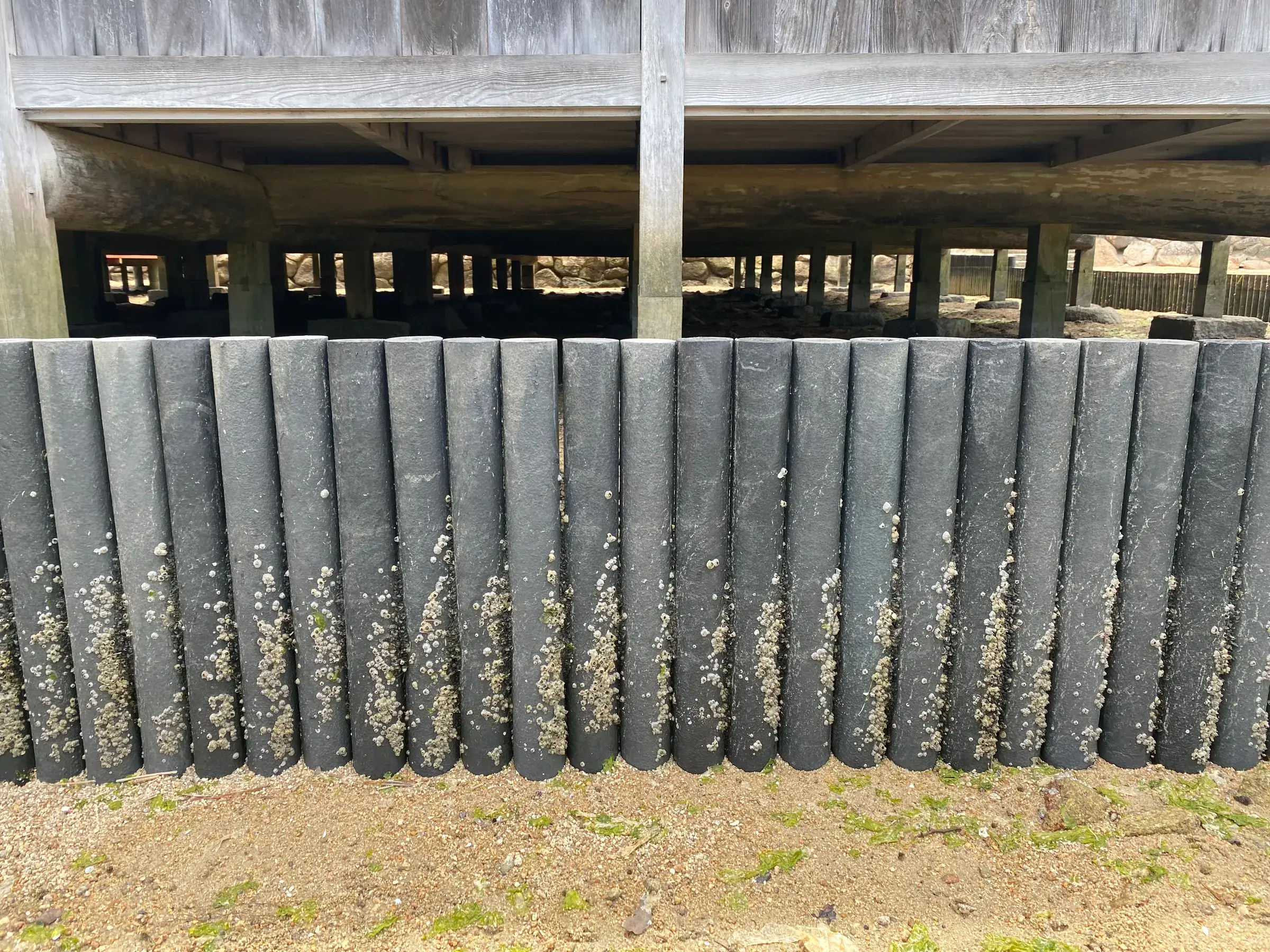
Keep it off
Keep it off: making ships, fishing gear and equipment harder for marine life to grip
Barnacles and algae both begin by gripping a material’s surface. We treat that surface with plasma and bond a fluorine-based antifouling agent to it, leaving a surface they struggle to grip. We use no copper, silver or other biocides.
Uses with a page of their own
-

Ships
Making ship propellers harder for barnacles and algae to grip.
We hold back the barnacles and algae that grow on a ship’s underwater parts by working on the material’s surface. On a brass propeller, a 12-month trial in the sea at Kure showed barnacles and algae taking hold less readily. We are also considering hulls and ocean-going ships.
-
Stage: Proven, Ship propellers (brass)
We bond a fluorine-based antifouling agent to the surface of brass propellers so barnacles and algae find it harder to take hold.
-
Stage: Concept, Ship bottoms, hulls and rudders
Using the treatment on a ship’s underwater parts, such as the bottom, the hull and the rudder.
-
Stage: Concept, Ocean-going ships
Using the treatment to cut the marine life that ocean-going ships carry from one sea to another.
-
-

Fishing and aquaculture
Fishing and aquaculture gear that shellfish and seaweed find harder to grip.
We hold back the shellfish and seaweed that grow on fishing and aquaculture gear by working on its surface. In research led by Professor Kuroda, our technical supervisor, no shellfish or algae had settled on a treated float a year after it was put in the sea, and rope used for nori nets showed a strong effect against settlement. We are continuing our own rope trials in the sea at Kure, and are also considering oyster rafts and similar gear.
-
Stage: Proven, KAKEN grant (Kuroda’s research) Floats and buoys
Treating the surface of the floats and buoys used in fishing and aquaculture so shellfish and seaweed take hold less readily. The evidence comes from a float tested in the sea in Professor Kuroda’s research.
-
Stage: Being tested, Rope
Treating the surface of rope used in fishing, aquaculture and elsewhere so shellfish and seaweed take hold less readily.
-
Stage: Proven, KAKEN grant (Kuroda’s research) Fishing and aquaculture nets
Treating the surface of fishing and aquaculture nets so shellfish and seaweed take hold less readily. The evidence comes from research by Professor Kuroda and Professor Terakado on rope used for nori nets.
-
Stage: Concept, Oyster rafts and baskets, and filters in land-based aquaculture
Using the treatment on aquaculture gear such as oyster rafts and baskets, and on the filters of land-based aquaculture. Barnacles on oyster rafts are the problem our company started from. It is the gear that would be treated, not the oysters themselves.
-
Underwater glass (windows, cameras and more)
Treating the surface of glass used in the sea, such as underwater windows and cameras, to keep fouling off it.
Stage: Proven, Our own work
In our own trial at Marine Craft Kazenoko (Kure), treated glass held up for 12 months. It turns slightly cloudy, but looks clear when it is in the water.
Related uses
- Stage: Concept, Marine equipment and infrastructure
- Stage: Concept, Keeping glass clean (vehicle windows, sensors and more)

Water intakes and cooling lines
Using the treatment on equipment that draws in seawater: ships’ intakes and pipework, and the intake equipment of power stations and factories.
Stage: Concept,
We are considering treating the surfaces of ships’ water intakes and pipework, and of the intake equipment and cooling lines of power stations and factories, to hold back fouling and cut the chemicals now added to prevent it, such as copper ions and chlorine.
Related uses
- Stage: Concept, Marine equipment and infrastructure
- Stage: Concept, Bacterial film (slime) in water systems

Marine equipment and infrastructure
Using the treatment on marine equipment other than ships, such as offshore wind installations, subsea cables and piers.
Stage: Concept,
We are also considering extending the treatment that holds back fouling to marine equipment other than ships: offshore wind installations, subsea cables, piers, tidal power, filters for seawater desalination, underwater robots and more.
Related uses
- Stage: Concept, Water intakes and cooling lines
- Stage: Concept, Seaweed beds on structures in the sea

Working with paints
Using the treatment that holds back fouling together with existing paints.
Stage: Concept,
We are also considering ways to combine the treatment that holds back fouling with paints, for example by treating a surface as the base for the paint.
Related uses
- Stage: Concept, Ship bottoms, hulls and rudders
- Stage: Concept, Getting urushi lacquer to hold on plastic

Related uses elsewhere on the site
-
Stage: Proven, Where the technology comes from (Kuroda’s research)
Antifouling with silver, copper or zinc ions, or precious metals (tried, and not used)Methods tried in the research of Professor Kuroda, our technical supervisor (KAKEN grant 22K04725), and not taken up.
-
Stage: Proven, Where the technology comes from (Kuroda’s research)
Sea trials of rope and floats (KAKEN grant 22K04725)Sea trials in research led by Professor Kuroda, our technical supervisor, which put treated rope and floats in the sea to see how marine life settled on them.
How to read the stages
- Stage: Proven,
- Results checked at sea or in the field, and on record
- Stage: Being tested,
- Trials, prototypes or development under way
- Stage: Concept,
- At the planning stage, including ideas shown as exhibits or prototypes
Tell us what you want to keep fouling off: what it is made of, how big it is and the waters it is used in.
Talk to us