 SeatecHIROSHIMA Ltd.
Help it take hold
Help it take hold: surfaces where seaweed and microbes settle (seagrass beds, seaweed, farm soil, greening)
Fix a different agent to the surface, and the same treatment that keeps life off makes a surface that living things settle on more easily. At sea we are taking this to restoring seagrass beds such as eelgrass; on land, to building farm soil. We are also considering greening, and seaweed beds on structures in the sea.
Uses with a page of their own
-

Eelgrass beds
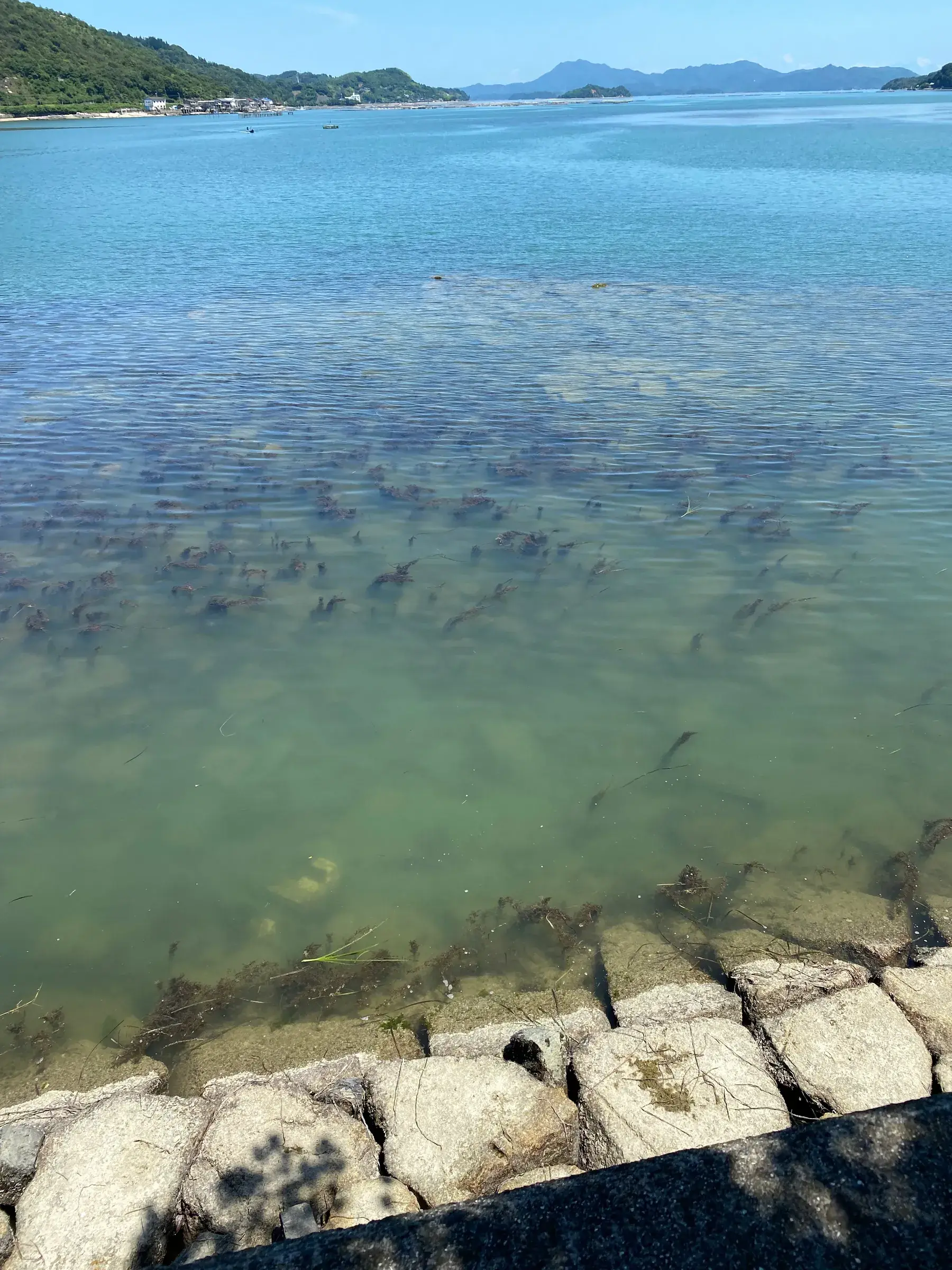
Restoring eelgrass beds: taking root on treated rope
We use the surface treatment that fights fouling the other way round: rope is treated so that eelgrass can take root on it, with the aim of restoring eelgrass beds. The trial at Kurahashi Island in Kure has been running since December 2023.
-
Stage: Being tested, Restoring eelgrass beds
Rope treated so that eelgrass can take root on it, with the aim of restoring eelgrass beds.
-
Stage: Concept, Restoring seagrass and seaweed beds in Nanao Bay (Noto)
An idea for restoring seagrass and seaweed beds in Nanao Bay, Noto, with local fishers.
-
-

Rice husks for better soil
Rice husks for better soil: a treated surface turns them into a material that builds soil
We turn rice husks into a material that builds farm soil. With a soil improver made from treated rice husks, we confirmed faster germination and growth of radishes in Hiroshima Prefecture. It is also in use at a farm in Takehara, Hiroshima Prefecture.
-
Stage: Proven, Rice husks for better soil
We treat the surface of rice husks and settle useful microbes on them, turning the husks into a soil improver for building up farm soil.
-
Stage: Concept, Bringing abandoned farmland back into use
An idea for using treated rice husks to bring fields that are no longer farmed back into cultivation.
-
Stage: Concept, Restoring salt-damaged farmland (Noto and elsewhere)
An idea for using treated rice husks to restore the soil of fields damaged by salt.
-
A base for seaweed to settle and grow (treated rope and cord)
Making the surface of rope or cord hydrophilic and fixing proteins or ions to it, so that spores and larvae drifting in the sea have a place to settle and grow naturally. The results come from Professor Kuroda’s KAKEN-funded research.
Where the technology comes from: Kuroda’s research
Published results of KAKEN grant 22K04725, led by Professor Kuroda, our technical supervisor. We list them apart from our own trials.
Stage: Proven, KAKEN grant (Kuroda’s research)
In the published report of KAKEN grant 22K04725, led by Professor Kuroda, our technical supervisor, vinylon rope with proteins or ions fixed to its surface was placed in the sea, and visual checks found far more algae and shellfish settling and growing on it naturally. Cord with protein fixed to it, placed in sea water where no seaweed was growing, grew algae on the cord alone, with none seen around it.
Related uses
- Stage: Proven, KAKEN grant (Kuroda’s research) Nori and seaweed farming nets
- Stage: Proven, KAKEN grant (Kuroda’s research) Sea trials of rope and floats (KAKEN grant 22K04725)

Nori and seaweed farming nets
Fixing protein to the rope of nori and other seaweed farming nets, so that nori spores drifting in the sea settle and grow on it naturally. The evidence comes from research by Professor Kuroda and Professor Terakado on rope used for nori nets.
Where the technology comes from: Kuroda’s research
Published results of KAKEN grant 22K04725, led by Professor Kuroda, our technical supervisor. We list them apart from our own trials.
Stage: Proven, KAKEN grant (Kuroda’s research)
Rope with protein fixed to it gave about twice the nori yield of untreated rope in sea trials reported for KAKEN grant 22K04725 (principal investigator: Professor Kensuke Kuroda; co-investigator: Professor Osamu Terakado), using 2 mm vinylon nori-net rope on 50 cm square frames.
Related uses
- Stage: Proven, KAKEN grant (Kuroda’s research) A base for seaweed to settle and grow (treated rope and cord)
- Stage: Proven, KAKEN grant (Kuroda’s research) Fishing and aquaculture nets

Bringing seaweed back to barren coasts
An idea for giving seaweed somewhere to take hold where it has disappeared from the sea (isoyake).
Stage: Concept,
Where seaweed has disappeared from the sea (isoyake), we are considering providing places under water that seaweed settles on easily, to help the beds recover.
Related uses
- Stage: Proven, KAKEN grant (Kuroda’s research) A base for seaweed to settle and grow (treated rope and cord)
- Stage: Concept, Marine equipment and infrastructure

Seaweed beds on structures in the sea
An idea for creating seaweed beds on structures in the sea, such as offshore wind foundations, breakwaters and seawalls.
Stage: Concept,
We are considering bringing parts or surface treatments that create seaweed beds to offshore wind foundations, breakwaters, seawalls and other structures in the sea, and to tidal flats.
Related uses
- Stage: Concept, Bringing seaweed back to barren coasts
- Stage: Concept, Marine equipment and infrastructure

Fishing gear that releases nutrients
An idea for answering the decline of nutrients in the Seto Inland Sea with fishing gear that releases them.
Stage: Concept,
As a response to the Seto Inland Sea becoming poorer in nutrients, we are considering a system in which surface-treated fishing gear releases nutrients at a controlled rate, together with standards for such gear. We have set this out in a policy proposal.
Related uses
- Stage: Proven, KAKEN grant (Kuroda’s research) Nori and seaweed farming nets
- Stage: Concept, Oyster rafts and baskets, and filters in land-based aquaculture

Greening (slopes, railway forests, hillsides and more)
An idea for using the surface treatment in greening work, on slopes, railway forests and elsewhere.
Stage: Concept,
For greening railway forests, slopes, roads, ports and airports, deserts, and hillsides after landslides, we are considering treating the surface of existing greening base materials so that native seeds, water and microbes take hold more easily while unwanted weeds find it harder to grow. We are also considering a one-year, step-by-step test: comparisons in the lab, then small outdoor plots, then trials on site.
Related uses
- Stage: Proven, Rice husks for better soil
- Stage: Concept, Seaweed beds on structures in the sea

Related uses elsewhere on the site
-
Stage: Concept, Working with us
Treated materials for restoring seagrass bedsAn idea for selling treated materials, such as rope, for restoring seagrass beds.
-
Stage: Concept, Working with us
Blue carbon creditsAn idea for turning the carbon taken up by restored seagrass beds into credits.
-
Stage: Concept, Working with us
Licensing the rice husk treatment equipmentAn idea in which equipment makers build and run the machines that treat rice husks.
-
Stage: Concept, Ocean data
Monitoring seagrass beds by satelliteAn idea for keeping an eye on the extent of seagrass beds in satellite images.
How to read the stages
- Stage: Proven,
- Results checked at sea or in the field, and on record
- Stage: Being tested,
- Trials, prototypes or development under way
- Stage: Concept,
- At the planning stage, including ideas shown as exhibits or prototypes
Tell us where — at sea, in a field, on a slope — and what you would like to take hold there.
Talk to us